A buyer in Pennsylvania may be able to walk away after a bad home inspection if the signed agreement of sale includes an active inspection contingency that allows termination and the buyer follows the required deadlines and notice procedures. A bad inspection report does not automatically cancel a real estate transaction.
Depending on the agreement, a buyer may be able to:
- Accept the property in its current condition.
- Request repairs.
- Request a seller credit or another financial adjustment.
- Seek additional inspections or specialist evaluations.
- Renegotiate certain terms if the seller agrees.
- Terminate the agreement if the inspection contingency permits it.
The agreement of sale controls what options are available and when they must be exercised. Gibson & Perkins, PC assists buyers and sellers in Media, Pennsylvania, and throughout Delaware County with real estate agreements, inspection issues, failed transactions, and related disputes.
Learn more about the firm’s real estate services at: https://www.gibperk.com/real-estate-attorneys-in-media-pa/







A Bad Inspection Does Not Automatically End the Deal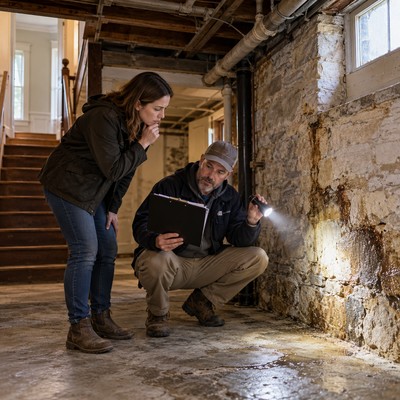
A home inspection can uncover conditions that change how a buyer views a property. The report may identify foundation movement, roof deterioration, water intrusion, electrical hazards, plumbing defects, mold concerns, aging mechanical systems, or signs of wood-destroying insects.
Even serious inspection findings do not automatically cancel the agreement of sale.
A buyer should review the signed agreement and determine:
- Whether an inspection contingency is included.
- Which inspections the contingency covers.
- When the inspection period ends.
- What notice the buyer must provide.
- How notice must be delivered.
- Which remedies the agreement permits.
Pennsylvania’s Home Inspection Law is found in Chapter 75 of Title 68 of the Pennsylvania Consolidated Statutes. Section 7506 regulates certain provisions in agreements of transfer concerning a buyer’s right to obtain a home inspection report and the consequences stated in the agreement. It does not create one universal right to cancel every Pennsylvania home purchase after an unfavorable inspection.
The buyer’s rights depend primarily on the language of the signed agreement of sale.

Professionalism is the Word
I highly Recommend Gibson & Perkins. I have used their services for approximately 6 years now and been through a few cases together with very positive outcomes. Personally, I have used Paul Fellman and Walter Timby on those occasions. Both, as a team & separately these Attorneys were wonderful to work with and easily accessible to reach if I had any questions. Professionalism is the word that comes to mind to describe the firm, as a whole. Always completely prepared for any surprises that may pop up during a trial. They were well versed on all pertinent info pertaining to each case. As I client, I always felt I was an integral part of the team, not an after-thought, that had to be brought up to speed a half hour before the trial started. I could not recommend this firm and Mr. Fellman and Mr. Timby any higher.Very Satisfied
I hired Paul Fellman after speeking to several different lawyers from different law firms because he was the most sincere. Paul did an excellent job on my landlord tenant issue I had on my rental property. He was there for me from the beginning to the end of the whole ordeal. I was very satisfied and I highly recommend him and his firm.
What Is an Inspection Contingency?
An inspection contingency is a contract provision that gives a buyer a defined period to investigate the condition of a property and take specified action based on the inspection results.
Depending on the agreement, the contingency may address a general home inspection as well as other property-specific evaluations. These may include inspections or testing related to:
- Radon.
- Septic systems.
- Well water.
- Wood-destroying insects.
- Environmental conditions.
- Mold.
- Structural concerns.
- Electrical systems.
- Plumbing systems.
- Roofing.
- Other conditions identified during the initial inspection.
A buyer should not assume that every agreement provides the same options. Some buyers waive inspections, limit the scope of an inspection contingency, accept a property in its current condition, or agree to terms that restrict what may happen after the inspection.
The Agreement of Sale Controls the Inspection Deadline
Inspection rights can be lost if a buyer misses a contractual deadline.
A Pennsylvania agreement of sale may establish a specific period for completing inspections, reviewing reports, obtaining additional evaluations, making an election, or delivering written notice to the seller.
If the buyer waits until the inspection period expires, the buyer may lose rights that were available while the contingency remained active.
A buyer should review the written agreement rather than rely only on a verbal explanation from an agent, inspector, contractor, seller, or lender.
Gibson & Perkins, PC has previously discussed how an agreement of sale can affect a buyer’s rights in a Pennsylvania real estate transaction: https://www.gibperk.com/media-real-estate-attorney-discusses-agreement-of-sales-and-protecting-the-buyer/
Can a Buyer Terminate Because the Repairs Are Too Expensive?
Possibly. The answer depends on the agreement of sale.
Assume a buyer in Media, Pennsylvania, signs an agreement that includes an active inspection contingency. The inspection later identifies an aging roof, active basement water intrusion, and an electrical condition that requires further evaluation.
The buyer obtains estimates and decides that the potential repair cost is more than the buyer wants to assume.
If the agreement permits termination during the inspection period and the buyer follows the required procedure before the deadline, termination may be available.
If the buyer waived the inspection contingency, limited the available remedies, or allowed the deadline to expire, the buyer may not have the same option.
The amount of a repair estimate does not create a universal right to cancel a Pennsylvania real estate agreement. The buyer should identify the contract provision that authorizes the requested action.
What If the Seller Agrees to Make Repairs?
A buyer does not always need to choose between accepting a defective property and terminating the transaction.
The buyer and seller may negotiate a resolution if the agreement allows them to do so.
For example, a buyer may ask the seller to repair a leaking roof, correct an electrical condition, service a heating system, address a plumbing problem, or provide a credit at closing. The seller may accept, reject, or propose changes to the request.
Any agreement concerning repairs, credits, price changes, or other inspection-related terms should be documented in writing through the appropriate amendment or addendum.
A written repair agreement may address:
- The exact work that will be completed.
- The person or company that will perform the work.
- Whether a licensed contractor is required.
- Whether permits are required.
- When the repairs must be completed.
- Whether invoices or receipts must be provided.
- Whether the buyer may reinspect the completed work.
- What happens if the repairs are not completed before settlement.
Specific terms can reduce later disagreements about what the seller agreed to repair and what standard of work was required.
For more information about contract issues that may arise in a Pennsylvania real estate transaction, visit: https://www.gibperk.com/media-real-estate-attorney-discusses-issues-in-the-real-estate-agreement-of-sales/
What Happens to the Buyer’s Deposit?
A buyer who properly terminates under an applicable contractual contingency may be entitled to the return of the deposit, depending on the agreement and whether the buyer satisfied the required termination procedures.
A buyer who refuses to close without a contractual or legal basis may face a different result.
A dispute can arise over whether:
- The inspection contingency was still active.
- The buyer completed the required inspection.
- The buyer delivered notice before the deadline.
- The notice was delivered in the manner required by the agreement.
- The agreement permitted the remedy the buyer selected.
- The buyer or seller complied with an amendment or repair agreement.
- The deposit should be released.
Before delivering a termination notice, a buyer should review the agreement carefully and confirm that the required contractual steps have been satisfied.
The buyer should also preserve relevant records, including:
- The signed agreement of sale.
- Inspection reports.
- Photographs.
- Specialist evaluations.
- Repair estimates.
- Emails.
- Text messages.
- Amendments.
- Addenda.
- Notices.
- Documents concerning the deposit.
What If the Inspection Finds a Defect the Seller Did Not Disclose?
An inspection issue can also raise a seller disclosure question.
Pennsylvania’s Real Estate Seller Disclosure Law generally requires a seller in a covered residential real estate transfer to disclose known material defects by completing the required property disclosure statement. The law contains exceptions for certain types of transfers.
If an inspection reveals a condition that appears to have existed for some time and the seller’s disclosure statement does not mention it, the buyer may want to compare the inspection findings with the disclosure documents.
A missing disclosure does not automatically establish that the seller violated the law. The facts may depend on whether:
- The seller knew about the defect.
- The condition qualified as a material defect.
- The condition was disclosed elsewhere.
- The problem developed after the disclosure was completed.
- A statutory exception applies.
Pennsylvania law also states that the seller disclosure requirements do not eliminate other disclosure obligations that may exist under other law to avoid fraud, misrepresentation, or deceit in a transaction.
A buyer who discovers a potentially undisclosed condition before settlement should address the issue before deciding whether to proceed.
When Should a Buyer Consider Legal Review?
A routine inspection negotiation may be resolved without a formal dispute. Legal review may become useful when:
- The inspection deadline is approaching.
- The agreement language is unclear.
- The defect could require substantial repairs.
- The seller rejects the buyer’s request.
- The buyer wants to terminate the agreement.
- The parties disagree about whether termination is permitted.
- The deposit is disputed.
- The seller disclosure raises questions.
- A proposed amendment may change other contractual rights.
A real estate attorney can review the agreement of sale, inspection contingency, inspection report, seller disclosure, proposed repairs, amendments, and written communications together.
An attorney can also help a buyer understand how a proposed credit, price adjustment, extension, waiver, or repair agreement may affect the rest of the transaction.
Information about attorney Edward L. Perkins is available at: https://www.gibperk.com/media-pa-attorney-edward-l-perkins/
A Practical Example in Media, Pennsylvania
Assume a buyer agrees to purchase a home in Media, Pennsylvania, for $475,000. The signed agreement includes an inspection contingency with a stated response deadline.
The inspection identifies significant basement moisture, evidence of prior water entry, and concerns about the electrical system. The buyer obtains specialist evaluations and receives repair estimates totaling approximately $28,000.
The buyer should review the agreement rather than focus only on the repair amount.
If the inspection contingency permits termination and the deadline remains open, the buyer may be able to terminate by following the required notice procedure. The buyer may also decide to request repairs, request a credit, or negotiate another written solution if the agreement permits those options.
If the buyer waived the contingency or missed the deadline, the available options may be narrower.
The same inspection findings can lead to different outcomes because the contract terms, deadlines, notices, and actions of the parties can differ from one transaction to another.
Speak With a Media Real Estate Attorney About Your Inspection Rights
A bad home inspection can require a buyer to make decisions within a short contractual period. Before terminating an agreement, waiving a contingency, accepting a credit, or agreeing to major repairs, review the written agreement and determine what rights and deadlines remain.
Gibson & Perkins, PC assists buyers and sellers in Media, Pennsylvania, throughout Delaware County, and nearby areas with agreements of sale, inspection disputes, title concerns, failed transactions, closing issues, and related real estate matters.
To discuss a Pennsylvania real estate matter, visit: https://www.gibperk.com/contact/
This article is for informational purposes only and does not constitute legal advice. Consult an attorney about your specific situation.